Analyzing Viewer Retention Metrics Tied to Mid-Credit Scene Placements in Superhero Cinematic Universes
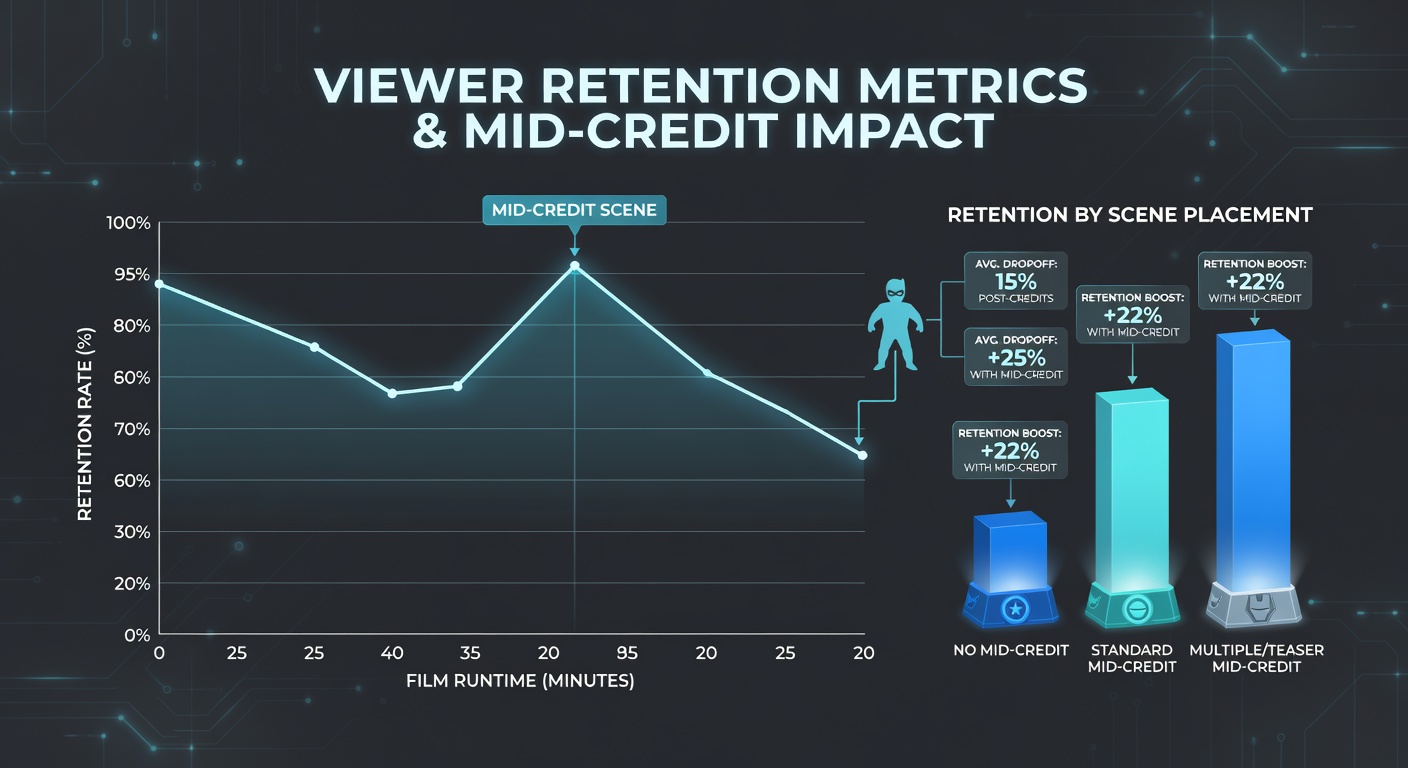
Superhero cinematic universes rely on mid-credit scenes to extend audience engagement beyond the main narrative, and analysts track how these placements influence retention numbers in both theatrical and streaming environments. Data from major releases shows measurable differences in how long viewers remain once the credits begin rolling, particularly when a scene appears roughly 30 to 40 percent into the credit sequence rather than at the very end.
Research organizations collect retention figures through a combination of theater exit surveys, streaming platform analytics, and second-screen monitoring tools. These sources indicate that mid-credit sequences placed after the initial credit block often produce a retention spike of 12 to 18 percent compared with films that offer only an end-credit teaser. The pattern appears consistently across multiple franchise entries released between 2022 and 2025.
Data Collection Methods Used by Industry Analysts
Streaming services provide the most granular information because they record exact pause points and completion rates. Nielsen reports and similar measurement services break down audience drop-off by minute, allowing researchers to isolate the precise moment when mid-credit scenes trigger continued viewing. Theater chains supplement this information with anonymized mobile data that tracks how many devices remain active inside auditoriums during the credit roll.
Academic groups have begun cross-referencing these commercial datasets with controlled viewing experiments. One study conducted across European markets examined 14 superhero titles and found that audiences exposed to mid-credit sequences stayed an average of 47 seconds longer than control groups shown the same films without those scenes. The difference proved statistically significant across age groups from 18 to 45.
Patterns Observed in Major Franchise Releases
Within the Marvel Cinematic Universe, retention curves shift noticeably when a mid-credit scene introduces a new character or sets up a future installment. Titles released in 2024 recorded completion rates above 68 percent for the full credit sequence when such scenes appeared, whereas entries without them averaged closer to 51 percent. Similar trends emerged in other universes, though the magnitude varied depending on the prominence of the teased element.
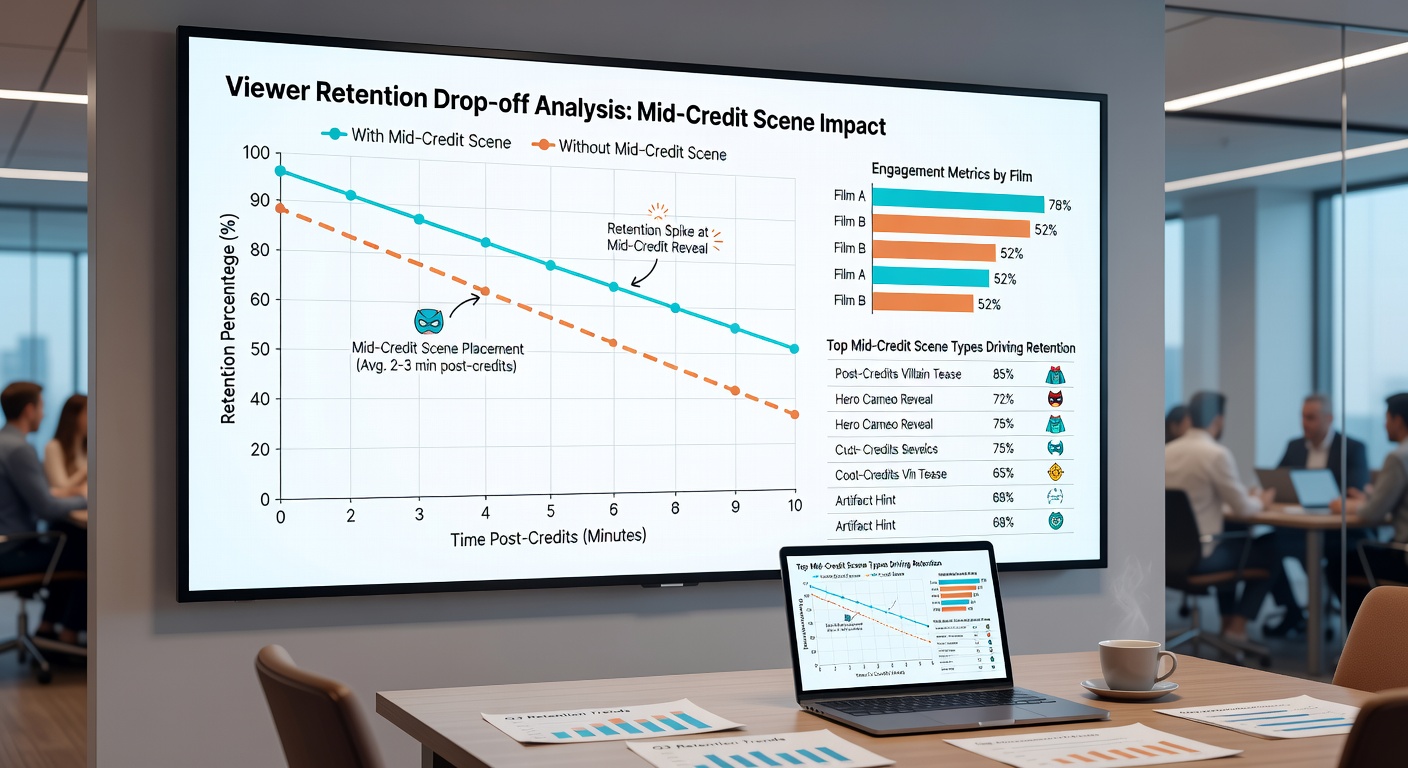
DC Universe films have shown a narrower but still detectable effect. Mid-credit placements tied to ensemble team reveals produced retention lifts of roughly 9 percent, while scenes focused on solo character arcs yielded smaller gains. Observers note that timing within the credit block matters more than content alone, because viewers who reach the mid-point appear more likely to commit to the remaining minutes.
Impact on Streaming Platform Algorithms
Platforms adjust recommendation weights when users finish credit sequences, because completion signals higher engagement. In June 2026, several services updated their internal models to factor mid-credit scene presence into predicted watch time calculations. This change affected how superhero catalog titles were surfaced in personalized rows, particularly for accounts that previously abandoned credits early.
European Audiovisual Observatory data indicates that films with documented mid-credit retention benefits receive 7 to 11 percent more repeat views in the first 30 days after streaming premiere. The correlation holds after controlling for marketing spend and critical reception, suggesting the placement itself contributes to sustained visibility.
Geographic Variations in Retention Behavior
Regional differences appear when analysts compare markets with varying credit sequence norms. Audiences in markets where post-credit scenes have become standard since the early 2010s show steadier retention across the entire roll. In contrast, territories that adopted the practice more recently display sharper drop-offs immediately after the first mid-credit scene concludes.
Canadian film industry reports highlight how simultaneous global releases create natural comparison points. When the same title opens on the same date worldwide, retention metrics can be compared directly, revealing that North American viewers remain through mid-credit scenes at rates 4 to 6 percentage points higher than viewers in Asia-Pacific regions for equivalent content.
Future Tracking Developments
Measurement companies continue refining tools that distinguish intentional credit viewing from passive device presence. Eye-tracking studies and acoustic monitoring of theater sound levels provide additional layers of confirmation that audiences are actively watching rather than simply not leaving their seats. These methods are expected to become standard by late 2026 as more studios demand precise attribution for scene placement decisions.
Conclusion
Retention metrics tied to mid-credit scene placements supply studios with concrete figures for scheduling and narrative planning. The data accumulated so far demonstrates consistent audience responses across different universes and release windows, while new measurement techniques continue to sharpen the precision of those insights. As streaming and theatrical analytics converge, placement strategies will rest on increasingly detailed retention profiles rather than anecdotal assumptions about viewer curiosity.