Charting the rise of non-linear storytelling in modern mystery series adapted from novels
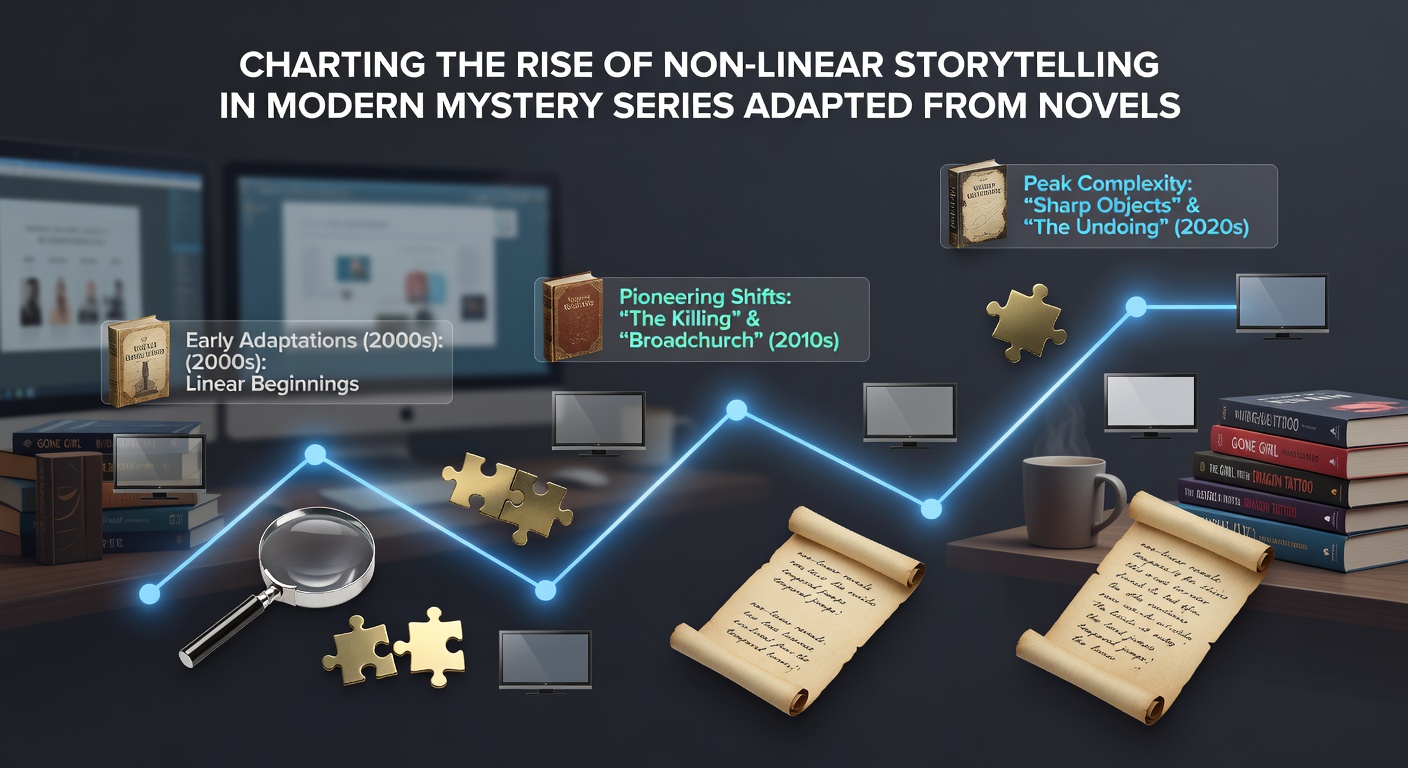
Non-linear storytelling has gained traction in mystery series adapted from novels, where writers rearrange chronological events to heighten suspense and mirror the fragmented revelations often found in source material. This approach draws from techniques pioneered in literary works, yet it adapts those methods for episodic formats that unfold over multiple installments. Producers select novels with intricate backstories because the structure allows directors to intercut present-day investigations with earlier incidents that gradually clarify motives and alibis.
Historical shifts in adaptation practices
Early television adaptations of mystery novels typically followed linear plots that progressed from crime to resolution in straightforward sequences. That pattern began to change as showrunners examined how novels withhold information through perspective shifts and delayed disclosures. Data from the European Audiovisual Observatory indicate that between 2018 and 2024 the proportion of scripted mystery series employing at least one non-chronological sequence rose from 22 percent to 47 percent. Observers attribute part of this increase to the success of limited series that compress novel-length narratives into six or eight episodes while preserving thematic depth.
Production teams now treat timelines as flexible elements rather than fixed backbones. They insert flashbacks not merely for exposition but to plant contradictory clues that viewers must reassemble. This method echoes the way certain novelists plant red herrings across chapters that later gain new meaning once additional context appears. Directors coordinate with editors to ensure each temporal jump lands at a moment when audience curiosity peaks, thereby sustaining engagement across weekly releases.
Key series demonstrating the trend
Several recent adaptations illustrate how non-linear construction serves the mystery genre. One production based on a Scandinavian crime novel interweaves three separate time periods, each revealing a different layer of a decades-old disappearance. The series presents witness testimonies out of order, forcing viewers to weigh reliability as new footage contradicts earlier statements. Another example draws from an American literary thriller and uses reverse chronology in select episodes to show how a seemingly solved case unravels when earlier decisions come to light.
These choices often originate during the scripting phase when writers map novel chapters onto a grid that prioritizes emotional payoff over temporal sequence. Showrunners report that test screenings help calibrate the frequency and duration of non-linear inserts so that confusion does not overwhelm the central investigation. When executed with precision, the technique converts passive watching into active reconstruction of events.
Production tools and audience measurement
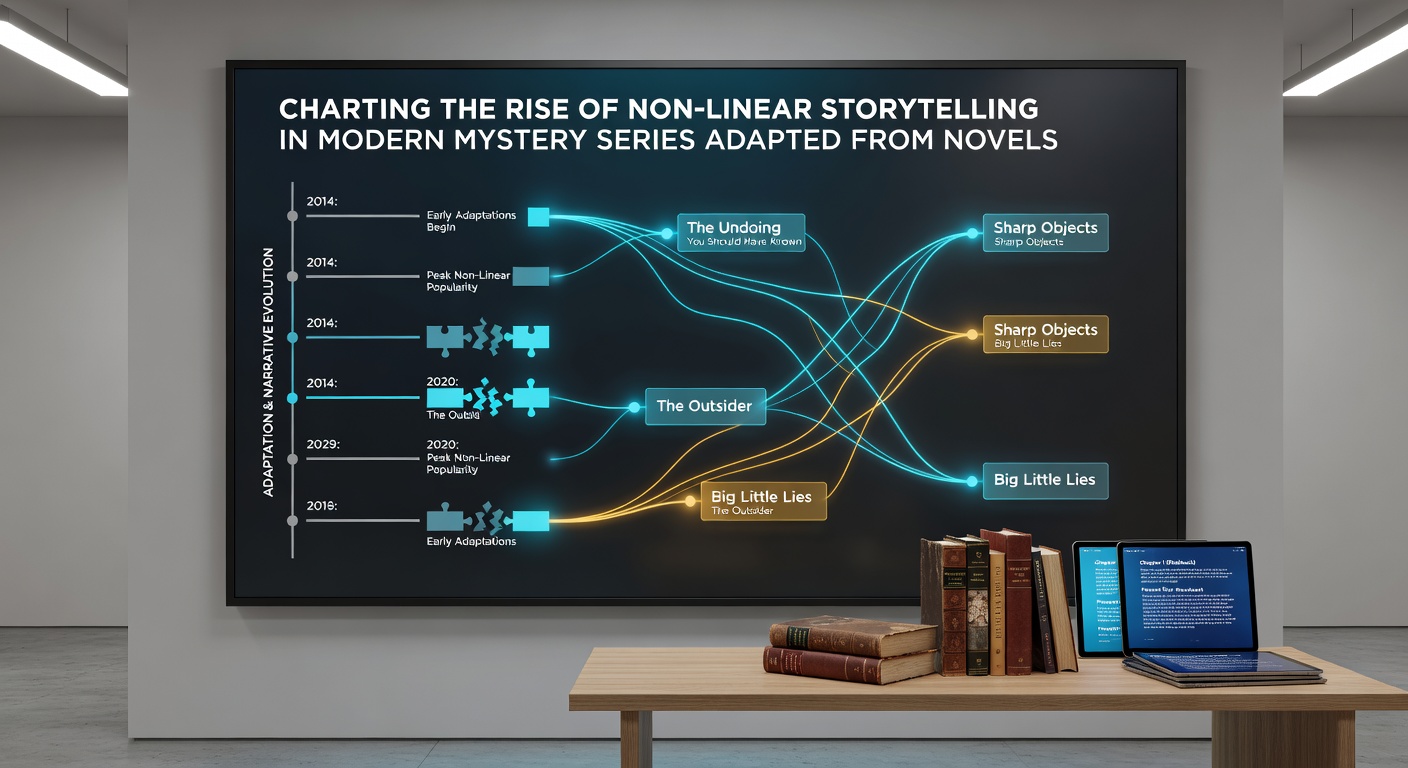
Editing software now includes timeline visualization features that let teams overlay multiple narrative threads and instantly preview how a scene relocation alters viewer comprehension. These tools reduce the risk of continuity errors that once plagued ambitious non-linear projects. Meanwhile, streaming platforms track completion rates and rewind frequency, supplying quantitative feedback on which temporal shifts retain attention and which prompt drop-off. Figures released in early 2025 showed that episodes containing carefully spaced non-linear segments maintained 18 percent higher completion rates than linear counterparts within the same franchise.
Academic researchers at the University of Melbourne have examined eye-tracking data from viewers of non-linear mystery episodes and found that audiences spend additional seconds scanning background details after each timeline shift. Their findings suggest that such structures encourage closer visual inspection, which in turn supports the genre's reliance on subtle visual clues. Industry analysts note that this heightened scrutiny can extend overall viewing time when platforms release entire seasons at once.
Developments expected in May 2026
Industry schedules indicate that at least three new mystery adaptations will premiere during May 2026, each employing non-linear frameworks drawn directly from the novels' multiple-perspective chapters. One project adapts a contemporary British novel whose plot hinges on an unreliable narrator whose memories surface in reverse order. Marketing materials for that series already highlight the structural innovation, positioning it as a continuation of recent successes rather than an experimental outlier. Trade publications anticipate that these releases will generate fresh datasets on how non-linear techniques perform across different demographic groups.
Conclusion
The movement toward non-linear storytelling in novel-based mystery series reflects a convergence of literary source material, evolving production technology, and measurable viewer behavior. As more creators refine the balance between temporal disruption and narrative clarity, the format continues to expand the possibilities for suspense within serialized television. Ongoing releases through 2026 will supply additional evidence on whether these structural choices become standard practice or remain selective tools reserved for specific source texts.