How LED Panel Advancements Enable Dynamic Mood Transitions During Psychological Thriller Shoots in Controlled Studio Environments
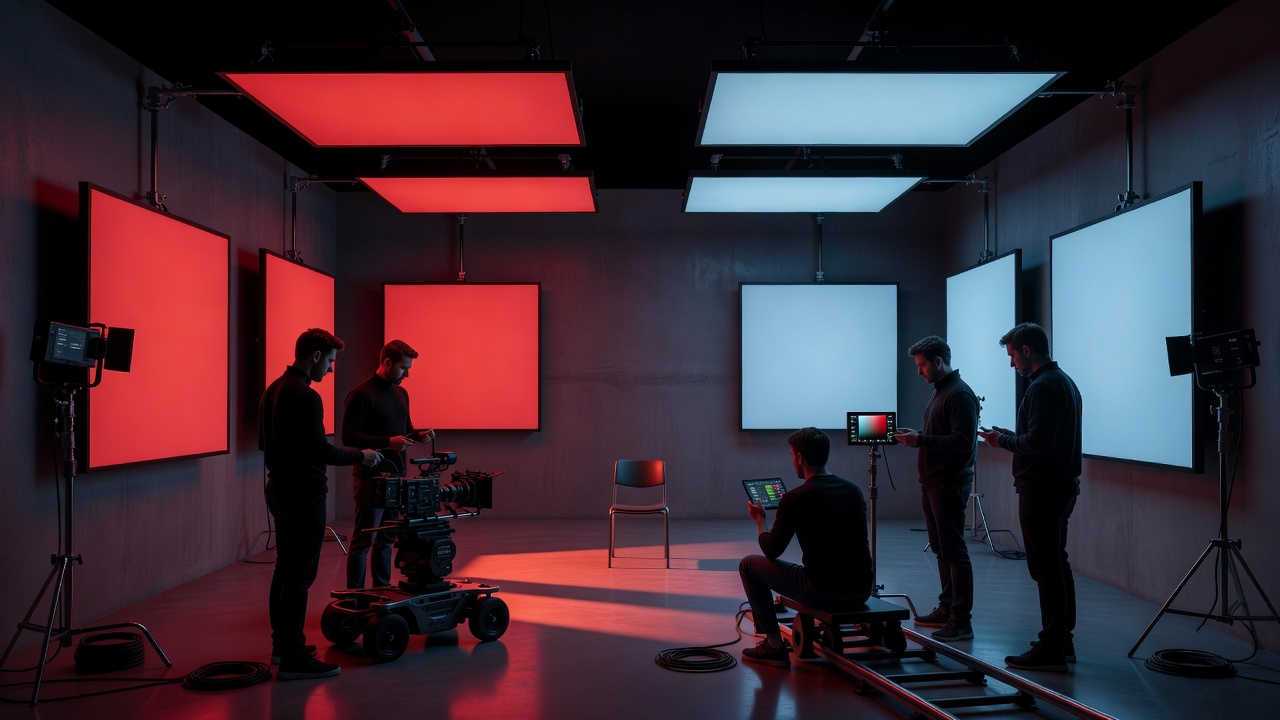
LED panel technology has transformed lighting setups in film studios by allowing precise adjustments to color temperature, intensity, and hue within seconds, which supports the rapid mood shifts essential for psychological thriller sequences shot indoors. These systems replace older fixtures that required manual gels or lengthy recalibrations, and they integrate directly with digital control protocols such as DMX and Art-Net to synchronize changes with camera movements and actor performances. Production teams now program sequences where lighting evolves from neutral daylight tones around 5600K to cooler, desaturated blues near 3200K without interrupting takes, maintaining continuity across extended scenes.
Technical Capabilities of Modern LED Arrays
Recent LED panels incorporate multi-channel emitters that combine red, green, blue, and white diodes with tunable CCT ranges spanning 2000K to 10000K, delivering color rendering indices above 95 to preserve accurate skin tones under shifting conditions. Manufacturers have introduced pixel-mappable surfaces where individual zones respond independently, enabling effects like creeping shadows or pulsing highlights that mirror character anxiety. Data from industry tests conducted through 2025 indicate response times under 10 milliseconds for full color crossfades, a capability that eliminates the visible lag common in legacy tungsten or fluorescent setups. In June 2026 several rental houses began deploying panels with built-in wireless mesh networking, which allows lighting designers to trigger transitions from tablets positioned anywhere on set while monitoring real-time feedback from on-camera sensors.
Integration With Production Workflows
Studio environments benefit because LED panels generate minimal heat compared with incandescent sources, reducing the need for extensive HVAC adjustments during long night shoots that rely on enclosed soundstages. Control software links LED cues to previsualization timelines imported from editing suites, so directors can review mood progressions during rehearsals and lock them into the final lighting plot. One example involves thrillers that alternate between intimate close-ups bathed in warm amber and wide establishing shots plunged into stark cyan; the same bank of overhead and practical LED units handles both without repositioning equipment. Observers note that this flexibility shortens setup times by up to 40 percent on controlled stages where natural light is entirely absent and every photon must be accounted for.
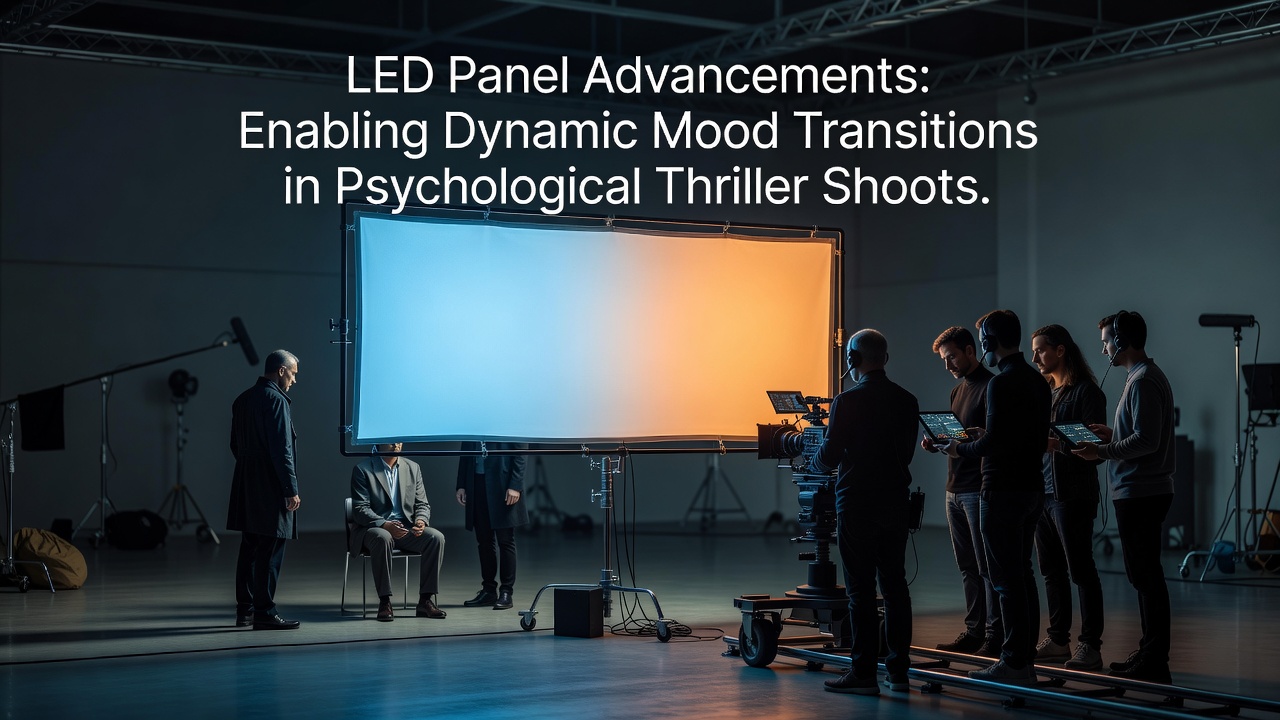
Energy and Safety Considerations in Enclosed Spaces
Power consumption figures from European Broadcasting Union reports show LED arrays draw roughly one-third the electricity of comparable HMI units while producing equivalent output, a factor that matters when multiple units operate simultaneously in sealed studios for twelve-hour blocks. Safety protocols updated in recent years require automatic thermal monitoring and flicker-free operation above 3000Hz to prevent interference with high-frame-rate cameras used for tension-building slow-motion inserts. Technicians calibrate panels to match the spectral sensitivity of specific digital sensors, ensuring that subtle desaturation effects remain visible on monitors without requiring additional post-production correction passes.
Coordination With Sound and Camera Teams
Sound recordists gain because silent LED drivers eliminate the hum that once forced separate lighting and audio schedules; this allows simultaneous capture of whispered dialogue and ambient tension cues. Camera operators use onboard LUTs that anticipate upcoming LED shifts, so exposure remains consistent even when panels move through complex gradients in a single continuous take. Research conducted at the University of Southern California School of Cinematic Arts documented how these synchronized workflows preserve the intended psychological pacing without visible artifacts on final deliverables.
Conclusion
LED panel systems continue to expand the range of achievable lighting states inside fully controlled studio spaces, giving directors and cinematographers tools to execute precise mood transitions that align with narrative beats in psychological thrillers. As control protocols and emitter efficiency improve through 2026 and beyond, production teams gain additional options for layering practical and digital effects while maintaining consistent technical quality across extended shooting days.