How Tax Credit Policies Steer Set Construction Choices for Period Musicals Filmed in Secondary European Cities

Tax credit policies across secondary European cities shape decisions about where and how production teams assemble elaborate sets for period musicals, and these rules tie funding eligibility directly to local spending thresholds. Cities such as Łódź in Poland, Timișoara in Romania, and Plovdiv in Bulgaria offer incentives that require a minimum percentage of budgets spent on regional labor and materials, which in turn directs crews toward on-site fabrication rather than prefabricated imports from larger hubs. Data compiled by regional film offices shows that qualifying projects must demonstrate at least 30 to 50 percent local expenditure depending on the jurisdiction, and this requirement frequently leads teams to source timber, fabric, and plaster from nearby suppliers while hiring carpenters and scenic artists from the immediate area.
Observers note that these policies create distinct patterns in set design scale and complexity. Productions targeting credits in smaller cities often scale back ornate facades or modular stage pieces because local workshops lack specialized milling equipment found in capital facilities, yet the same rules encourage investment in training programs that build those capabilities over time. A 2024 industry report from the European Audiovisual Observatory documented how several musical adaptations shifted from imported steel framing to locally welded aluminum structures to meet spending mandates while maintaining structural integrity for dance sequences.
Local Spending Requirements and Material Sourcing Patterns
Secondary cities structure their tax credits around tiered reimbursement rates that rise when productions exceed baseline local procurement levels, and this mechanism steers choices toward regional lumber mills or textile factories instead of centralized European distributors. Teams filming 1920s jazz-era musicals in Plovdiv, for instance, have documented increased use of Bulgarian oak for stage platforms because the credit calculation includes the full value of domestically harvested wood. Similar dynamics appear in Timișoara where incentive formulas reward projects that contract with Romanian foundries for period lighting fixtures rather than shipping from Germany.
Production accountants track these expenditures meticulously because failure to meet thresholds can reduce rebate percentages from 25 percent down to 15 percent. Figures released by Poland's film support agencies indicate that musical projects filmed in Łódź between 2022 and 2025 allocated an average of 42 percent of set budgets to local vendors, a shift attributed to updated credit rules introduced after 2021. These requirements also influence finish choices, with crews opting for hand-painted backdrops over digital prints when local artisans qualify for additional wage subsidies.
Workforce Development and Construction Techniques
Tax policies that link credits to apprenticeship programs push productions to train local crews in historical construction methods rather than transporting experienced teams from major centers. In practice this means scenic artists in secondary cities learn traditional gilding or stenciling techniques on the job, and productions extend schedules to accommodate that learning curve while still claiming the full incentive. Researchers at the University of Bucharest's film economics program tracked how one 2023 musical adaptation incorporated three weeks of on-site training for 18 local carpenters, an expense fully offset by the regional credit structure.
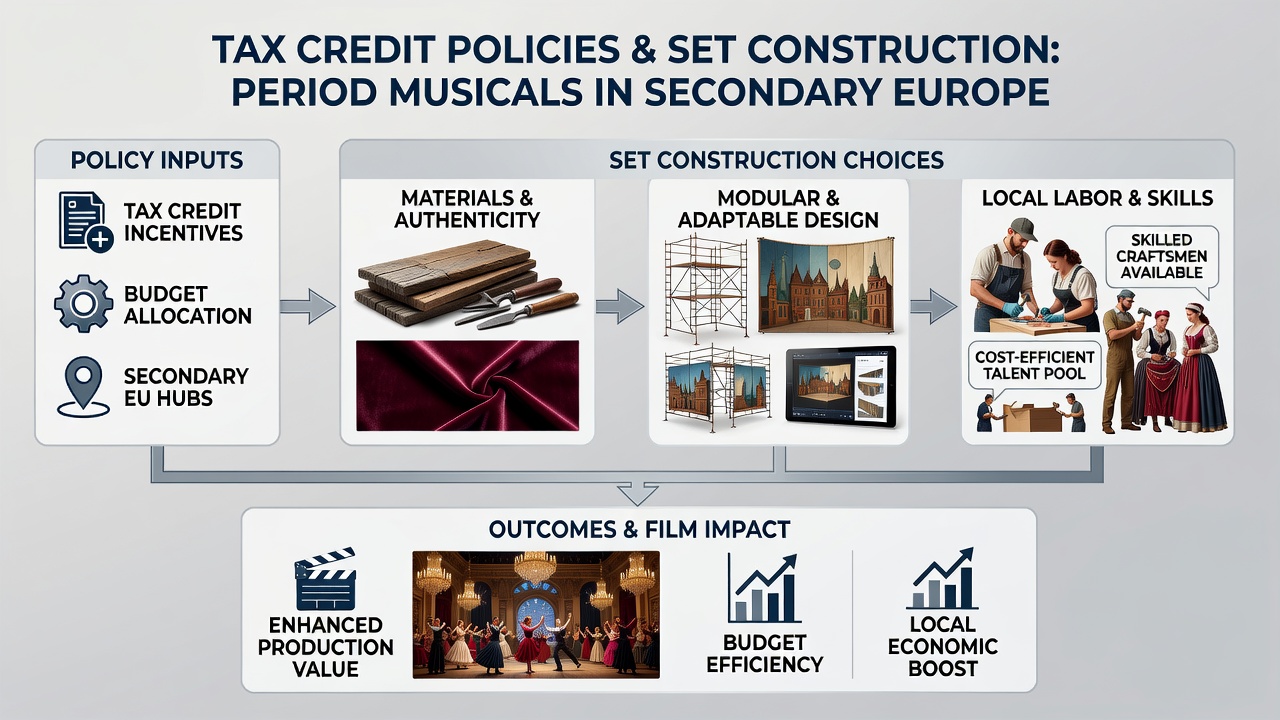
Construction techniques adapt accordingly. Instead of shipping pre-assembled flats from Western Europe, teams in these cities build modular units on location using portable CNC routers purchased or leased with credit-supported funds. The approach reduces transport emissions and satisfies environmental add-on bonuses available in several jurisdictions. What's notable is that these adaptations have produced reusable set inventories that subsequent productions can rent locally, further lowering future costs and reinforcing the incentive ecosystem.
Policy Updates Effective June 2026 and Emerging Adjustments
Revised guidelines scheduled for implementation across multiple secondary city programs in June 2026 will raise the local labor threshold by five percentage points while introducing new categories for sustainable material sourcing. Early filings suggest productions already adjusting material lists to include certified recycled composites that qualify under the forthcoming rules. Industry analysts expect continued emphasis on regional foundries and textile mills, particularly for musicals requiring period-accurate metallic trim or embroidered costumes integrated into set pieces.
Case documentation from recent projects illustrates the cumulative effect. One ensemble musical shot in Łódź replaced imported brass hardware with locally cast alternatives after the production recalculated its credit eligibility, and the change preserved both the visual period detail and the full rebate amount. Parallel examples in Romania show crews substituting imported canvas for domestically woven linen when the incentive formulas began weighting textile origin more heavily.
Conclusion
Tax credit frameworks in secondary European cities continue to channel set construction decisions toward local resources and labor markets, and the mechanisms reward measurable spending within defined geographic boundaries. Productions adapt by recalibrating designs, training timelines, and material specifications to align with reimbursement criteria, while upcoming 2026 adjustments are expected to intensify those same pressures. The resulting patterns appear consistently across multiple jurisdictions and project types, driven by the explicit linkage between fiscal incentives and on-the-ground construction choices.