Inside the Workshops Where Miniature Model Builders Craft Epic Scale for Space Opera Sequences
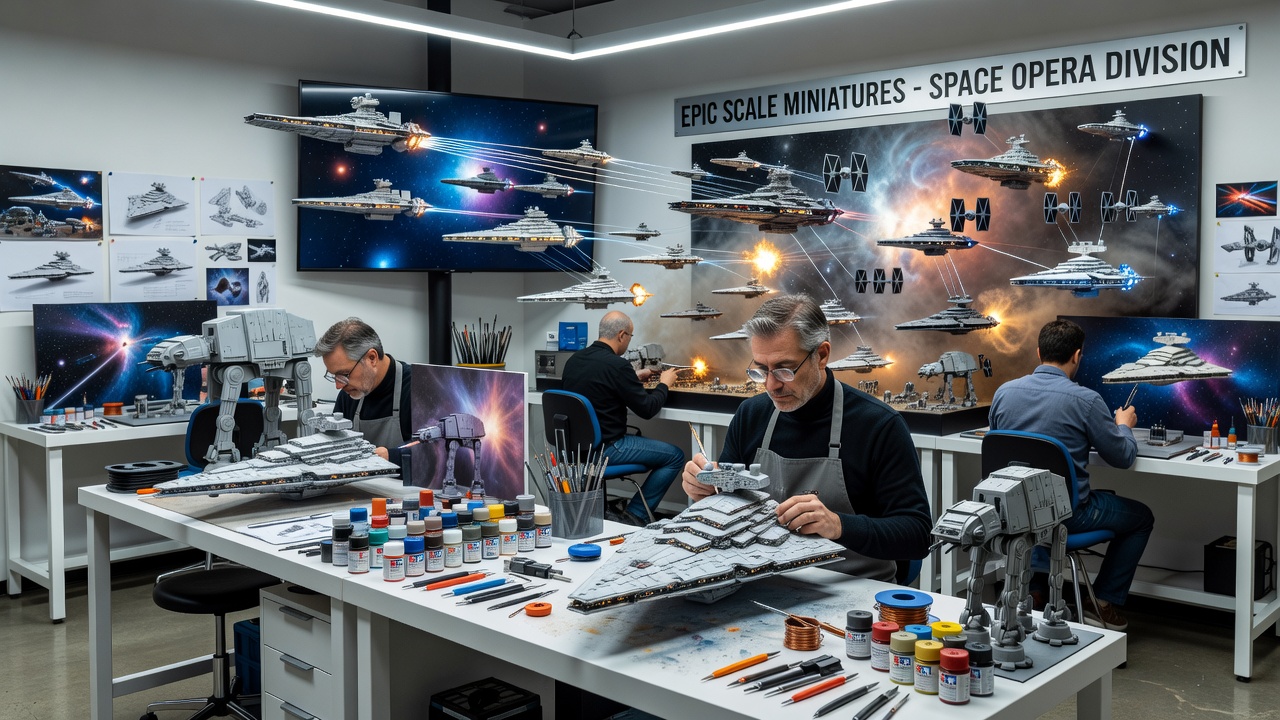
Workshops dedicated to miniature model construction continue to support visual effects pipelines for space opera films, where physical models provide tangible scale and lighting references that complement digital elements. Builders employ traditional techniques alongside modern tools, creating vessels and environments that range from a few centimeters to several meters in length, depending on the sequence requirements and camera movement plans.
Core Construction Methods
Model makers start with detailed blueprints derived from concept art and production designs, then select materials such as resin, styrene, and aluminum for structural integrity and surface detail. They machine individual components on CNC equipment before assembling them by hand, adding panel lines, rivets, and weathering effects that simulate wear from extended space travel. Multiple layers of paint and clear coats follow, with some teams incorporating fiber optics for internal lighting systems that activate during filming.
These physical models undergo rigorous testing under studio lighting rigs to ensure they hold up when photographed at high frame rates. Teams document every stage with reference photos so digital artists can match reflections and shadows when integrating the models into full scenes.
Scale and Detail Calibration
Builders work across several scales simultaneously, with larger models used for close-up hero shots and smaller ones for wide establishing views where dozens of ships appear on screen. Calibration involves precise measurements so that when footage is combined in post-production the relative sizes remain consistent across cuts. Observers note that workshops often maintain libraries of standardized parts, such as thruster nozzles and antenna arrays, which speed up production when multiple vessels share design language.

As of June 2026, several productions have scheduled miniature photography blocks that run alongside principal photography, allowing directors to review physical footage before committing to extensive digital revisions. Data from industry reports indicate that hybrid pipelines, which blend miniatures with computer-generated imagery, reduce overall rendering times for certain types of space sequences.
Material Sourcing and Supply Chains
Workshops source specialized plastics and metals from suppliers across North America and Europe, with some components fabricated in-house when commercial stock falls short. Research from the Visual Effects Society shows that lead times for custom resins have shortened in recent years due to improved 3D printing capabilities that allow rapid prototyping of test pieces. Builders then refine these prints into master molds for casting multiple identical parts.
Environmental controls inside the workshops maintain consistent temperature and humidity so that delicate assemblies do not warp during the multi-week construction cycles typical of large capital ships or space stations.
Integration with Modern Production Pipelines
Once models are complete, they move to motion-control stages where robotic camera systems execute repeatable moves. Technicians sync these moves with digital doubles so that any damage or destruction captured on the physical model can be extended seamlessly in software. According to production records maintained by major studios, this approach preserves authentic light interaction that purely digital models sometimes struggle to replicate without extensive shader development.
Teams also prepare breakaway sections and pyrotechnic mounts for sequences involving impacts or explosions, ensuring safety protocols align with both studio insurance requirements and local fire regulations. The National Film Board of Canada has documented several training programs that teach emerging model makers how to incorporate these safety features without compromising visual fidelity.
Training and Skill Transmission
Experienced builders mentor apprentices through structured programs that cover everything from basic kit-bashing to advanced airbrushing and electronics integration. These apprentices learn to interpret complex orthographic drawings and to troubleshoot fit issues that arise when multiple sub-assemblies come together for the first time. Workshops report steady demand for these skills even as digital tools advance, because certain lighting and depth cues remain easier to achieve with physical objects.
Conclusion
Miniature model workshops continue to occupy a defined niche within space opera production, supplying physical assets that support both practical photography and digital augmentation. Their methods evolve with available technology while preserving core hand-craft techniques that have defined the craft for decades. As productions plan future releases, these facilities maintain archives of past models that serve as reference libraries for new designs and as teaching tools for the next generation of builders.