Motion Capture Advancements Capturing Nuanced Performances for Animated Literary Adaptations
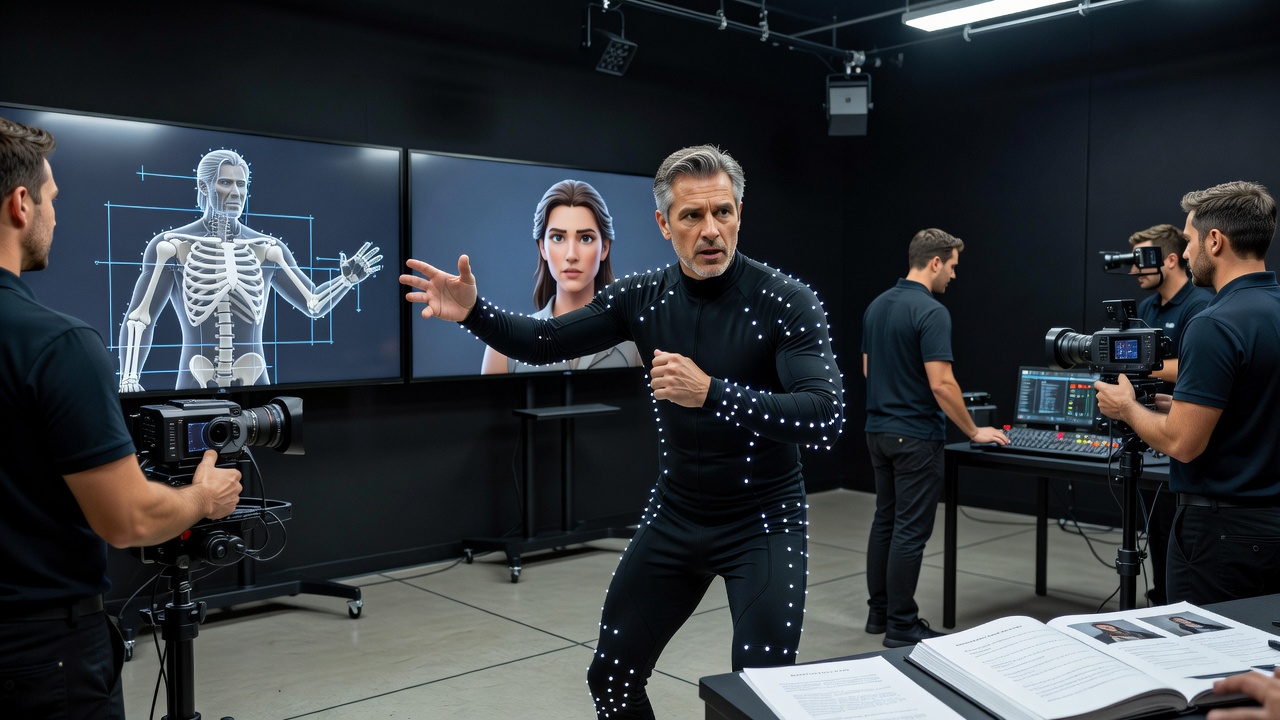
Animation studios have integrated advanced motion capture systems to translate subtle human performances into digital characters drawn from literary sources, and these technologies continue to evolve with higher precision tracking and real-time processing capabilities. Systems now record thousands of data points across the body and face simultaneously, allowing animators to preserve micro-expressions and emotional shifts that define complex protagonists from novels and short stories. Data from industry reports shows capture volumes have increased by over 300 percent in the past five years as hardware resolutions climb and software algorithms refine noise reduction.
Core Technologies Driving Performance Fidelity
Optical marker systems paired with inertial sensors form the backbone of current setups, yet hybrid approaches combine both methods to minimize occlusion issues during extended takes. Facial rigs track up to 150 distinct muscle groups, capturing everything from eyelid flutters to jaw tension that convey internal conflict in characters adapted from psychological fiction. Researchers at institutions across North America and Europe have documented how these rigs reduce post-production cleanup time by 40 percent compared with earlier generations, freeing artists to focus on interpretive layering rather than corrective work.
AI-assisted cleanup tools now predict and fill gaps in marker data using trained models derived from thousands of prior sessions, while volumetric capture stages record full 3D performances without physical markers. Studios report that these stages enable directors to review complete scenes on set, adjusting actor blocking before final rendering begins. In July 2026 several major facilities plan to debut portable volumetric units for location shoots tied to outdoor literary sequences, expanding the range of environments available for adaptation work.
Application in Literary Adaptations
Animated versions of classic and contemporary literature rely on motion capture to maintain authorial voice through physicality, and productions have adapted works ranging from 19th-century novels to recent speculative fiction. Performers study source texts for weeks to internalize cadence and gesture patterns before entering the volume, then layer those choices onto digital avatars whose proportions may differ dramatically from human anatomy. One production adapted a modernist novel by mapping an actor's restrained posture onto an elongated digital figure, preserving the original sense of emotional restraint while fitting the story's stylized world.
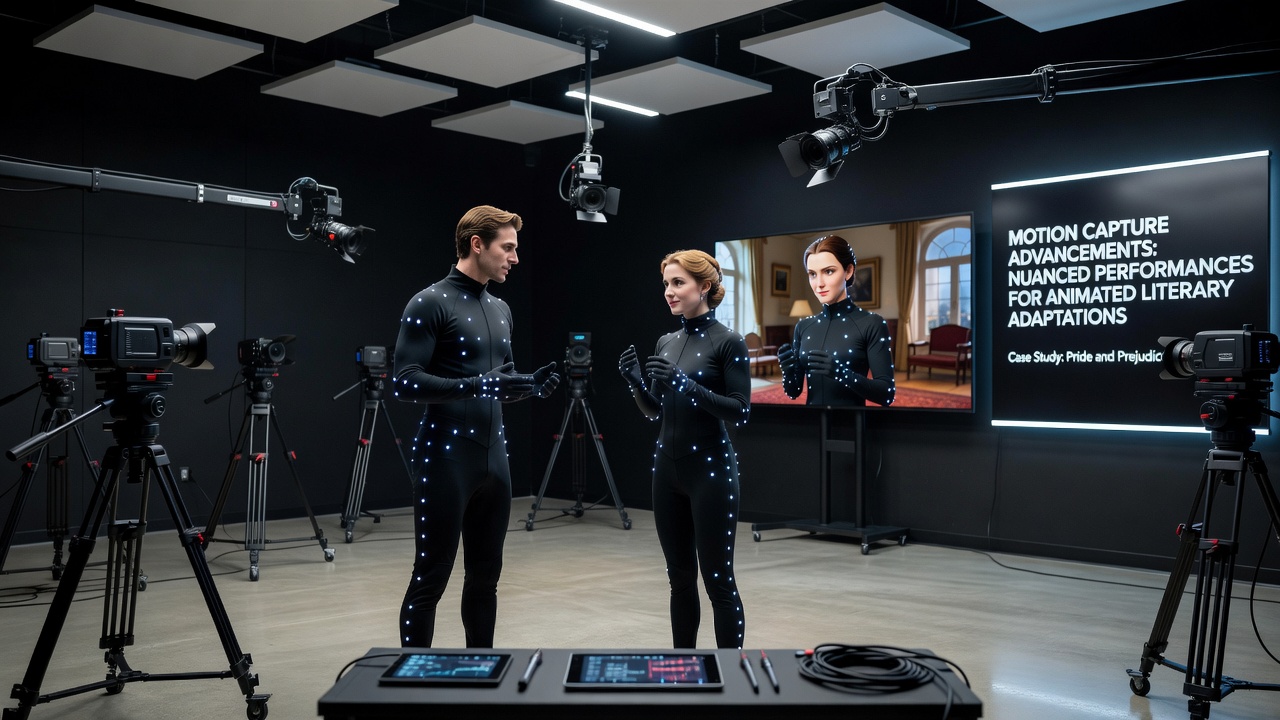
Multi-actor sessions allow ensemble dynamics to emerge organically, and software synchronizes separate capture streams into unified scenes with sub-millisecond accuracy. This approach proves especially useful for dialogue-heavy passages where timing and interruption patterns carry narrative weight. Figures from the Animation Guild indicate that motion capture now accounts for roughly 35 percent of principal character animation in feature-length literary projects, up from 12 percent a decade earlier.
Integration With Traditional Animation Pipelines
Animators receive raw performance files and apply selective exaggeration or stylization while retaining core emotional beats, and this hybrid workflow preserves the actor's interpretive choices without locking the final style to photorealism. Keyframe artists retain control over secondary motion such as cloth and hair, yet they start from a performance foundation that already contains authentic weight shifts and breathing rhythms. Studies published through ACM SIGGRAPH proceedings demonstrate that audiences rate emotional clarity higher in sequences built from captured data than in fully keyframed equivalents.
Real-time engines now preview captured performances inside virtual environments matching the story's setting, allowing directors to approve or request adjustments while the actor remains available. This reduces the number of reshoots needed and shortens overall schedules. Australian and Canadian research consortia have contributed open-source calibration tools that standardize data across different hardware brands, easing collaboration between international studios on large adaptations.
Future Directions and Industry Standards
Industry groups continue to develop metadata standards for motion files so that performances captured on one project can transfer to new characters with minimal retargeting. These standards also support archival preservation of actor work for potential re-use in sequels or educational contexts. Training programs at film schools now include dedicated motion capture modules that teach performers and technicians to collaborate on literary source material, emphasizing text analysis alongside technical proficiency.
Hardware miniaturization has lowered entry barriers for smaller studios, and cloud-based processing farms handle the heavy computation required for high-density facial data. Observers note that regional incentives in multiple countries now specifically support motion capture infrastructure, encouraging local talent pools to participate in global literary adaptation pipelines.
Conclusion
Motion capture continues to mature as a bridge between live performance and animated storytelling, supplying the nuanced physical detail required to honor source texts while enabling visual invention. Continued hardware and software gains, alongside cross-industry standards, position the technique to support an expanding range of literary properties in the years ahead.